You want a fence that fits your budget, purpose, and property without surprises. Hire a qualified fencing contractor who inspects your site, gives a clear written estimate, and explains materials and timelines up front to avoid costly delays.
In Fence Contractor Guide You’ll learn how to compare bids, verify licenses and insurance, and spot red flags during the hiring process. The article also walks through typical installation steps and service options so you can plan costs and timing with confidence.
Choosing a Fence Contractor
You need a contractor who combines proven skill, clear pricing, and proper protections so your fence performs as expected. Focus on workmanship, fair written quotes, and verifiable credentials when deciding.
Qualities of a Professional Fence Contractor
Look for at least 3–5 years of local fence experience and a portfolio of completed jobs similar to yours. Skilled contractors will show photos, reference contacts, and examples of material-specific installs (wood, vinyl, chain-link, aluminum).
Communication matters: the contractor should provide a written estimate, a timeline with start/finish dates, and a single point of contact. Ask about crew qualifications, subcontractors, and who handles permitting. Expect clear answers on post-install cleanup and how they protect landscaping.
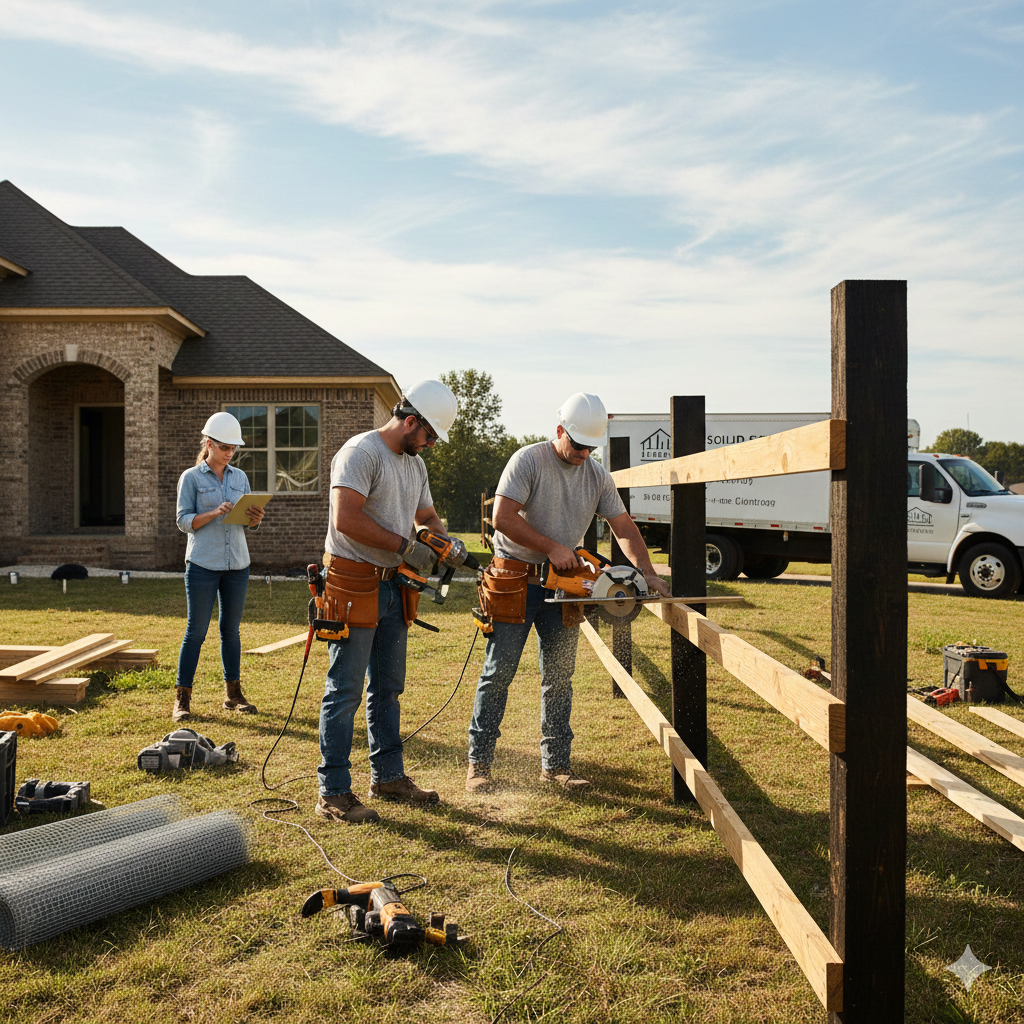
Check workmanship indicators: straight posts, properly set footings, and consistent hardware and fasteners. A reliable contractor will offer a visible warranty on labor and explain maintenance needs for your chosen materials.
How to Compare Fence Contractor Quotes
Request at least three written bids that break down: materials (brand/grade), labor hours, post/footing depth, gates, hardware, and cleanup. Compare line items, not just final totals, to spot low bids that omit essential work like concrete for posts.
Use a simple comparison table:
- Contractor A: Material — Brand X vinyl; Posts — 24″ concrete; Labor — 5 days; Warranty — 5 years (materials) / 2 years (labor)
- Contractor B: Material — Generic vinyl; Posts — 12″ gravel; Labor — 3 days; Warranty — 1 year labor
- Contractor C: Material — Brand X vinyl; Posts — 36″ concrete; Labor — 6 days; Warranty — 7 years / 3 years
Ask about change-order policy and payment schedule. Avoid large upfront payments; a common structure is 20–30% deposit, balance at completion. Verify start dates and penalties for missed milestones if timing is critical.
Licensing, Insurance, and Warranties
Confirm the contractor holds the required state or local license for fence work. Ask for the license number and verify it online or with your local contractor board. A valid license signals compliance with building codes and subcontractor rules.
Insurance: require a certificate of general liability and workers’ compensation naming you as additional insured when possible. Liability protects your property; workers’ comp covers injuries so you aren’t liable. Call the insurer to confirm coverage and active status.
Warranties should be written and specific. Expect separate material and labor warranties with duration and what actions void coverage. Get dispute resolution terms and how warranty claims are handled (repair, replace, prorated). Keep all warranty documents with your closing paperwork.
Fence Installation and Services
You’ll find options for materials, repair plans, and realistic timelines that match common residential and light commercial projects. Each choice affects cost, durability, maintenance needs, and installation time.
Types of Fencing Solutions Offered
You can choose from wood, vinyl, aluminum, chain-link, and ornamental steel depending on your goals. Wood provides a traditional look and is easy to customize; expect staining or sealing every 2–5 years. Vinyl resists rot and needs only occasional cleaning, making it low maintenance. Aluminum and ornamental steel offer long-term durability and a decorative appearance with minimal upkeep. Chain-link suits security and budget-conscious uses; add privacy slats or slat inserts if you need screening. Contractors often offer gate hardware, post caps, and concrete footing options; ask about pressure-treated posts and local code requirements for pool or corner fences. Request samples and a written material list so you know exactly what will be installed.
Fence Repair and Maintenance
You should inspect fences annually and after major storms to catch rot, rust, loose posts, or broken pickets early. For wood fences, contractors commonly replace individual boards, reset or re-concrete leaning posts, and treat posts below ground level. Metal fences may need rust spot treatment, weld repairs, or hinge and latch replacement for gates. Vinyl repairs usually involve panel replacement rather than patching. Many contractors offer seasonal maintenance plans covering staining/painting, tightening hardware, and vegetation control; ask whether maintenance includes warranty work and whether crews use galvanized fasteners or stainless steel for coastal areas. Get a written estimate that lists parts, labor, and any recommended follow-up intervals.
Project Timelines and Expectations
Typical single-family fence installs take 1–5 days for 50–200 linear feet, depending on terrain, gate count, and soil conditions. Permits or utility locates can add days to weeks before work starts; confirm who pulls permits and schedules locates. Expect site prep (marking, grading) on day one, post-setting and concrete curing on day two or three, and panel or picket installation afterward. Weather and hidden obstacles like rock or roots can extend the schedule; contractors should provide a contingency plan and daily progress updates. Ask for a clear payment schedule tied to milestones, a start date window, and a final walk-through checklist that documents completed work and any remaining punch-list items.