Finding reliable waste services near me saves time, prevents fines, and keeps your space clean. Search for local providers that offer the specific pickup, recycling, or dumpster options you need, compare service frequency and pricing, and confirm licenses and customer reviews before you commit.
You’ll learn which types of local waste services solutions—residential pickup, commercial hauling, recycling, and one-time bulk or construction removal—match your needs and budget. The article will also show how to vet providers so you can pick a reliable company that follows local rules and delivers consistent service.
Types of Local Waste Solutions
You’ll find options for routine curbside pickup, business-scale collection and processing, and dedicated services for large or unusual items. Choose services based on container size, pickup frequency, and whether materials are recyclable, hazardous, or bulky.
Residential Collection Services
Most neighborhoods offer scheduled curbside pickup for household trash and recyclables. You can subscribe to weekly or biweekly trash collection and a parallel recycling service that accepts paper, cardboard, glass, and many plastics. Check your municipality’s accepted-item list and rules for sorting to avoid rejected loads or extra fees.
Yard waste and organic pickup may run seasonally or as a separate program. Many providers supply branded bins or carts in specific sizes (e.g., 95L, 240L); swapping to a different size often requires a service request. Pay attention to bulk pickup policies for mattresses or appliances, which may need an appointment or sticker fee.
Commercial and Industrial Options
Businesses need tailored schedules and container types to match waste volumes and regulatory requirements. You can contract dumpsters (2–8 yards) or compactors for high-volume sites, and choose daily to monthly pickups depending on waste generation. Recycling services for cardboard, mixed paper, and specific stream recycling (e.g., metals, organics) reduce hauling costs and often require balers or roll-off containers.
Large sites must confirm manifests, chain-of-custody paperwork, and compliance for non-hazardous versus hazardous streams. Ask potential vendors about landfill diversion rates, transfer-station access, and whether they offer sustainability reporting or invoice consolidation to simplify accounting.
Specialty and Bulk Item Disposal
For construction debris, renovation waste, or oversized items, roll-off dumpster rental and transfer-station drop-off are common choices. You can rent roll-offs by volume (typically 10–40 cubic yards) for short-term projects; providers often list prohibited materials and recycling options like concrete or metal recovery. Some services offer Bagster-style temporary containers for smaller renovation jobs.
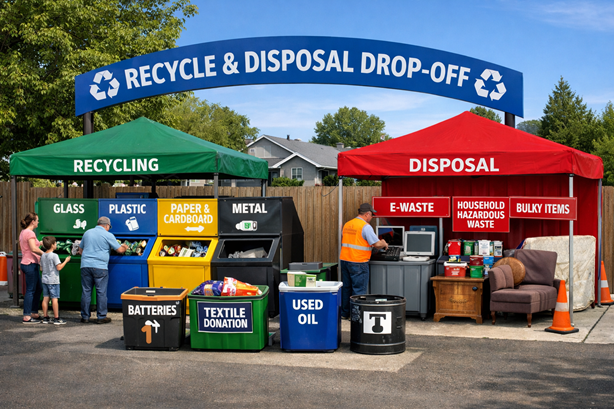
Household hazardous waste—paints, batteries, solvents—usually requires designated collection events or drop-off centers. Electronics recycling and appliance pickup often involve separate fees and certification for responsible recycling. Confirm pickup lead times, accepted-item lists, and any required prep (e.g., draining fluids, removing doors) before scheduling.
Choosing a Reliable Provider
You want a provider that reliably serves your address, fits your budget, and follows local environmental rules. Focus on clear service boundaries, transparent pricing, and valid permits when comparing options.
Evaluating Service Coverage
Check whether the company offers pickups on your street, setout times, and container types. Confirm scheduled frequencies (weekly, biweekly) and whether they handle bulk items, hazardous materials, or yard waste. Ask about service radius and any extra fees for long-drive locations or remote collection points.
Verify equipment availability: dumpsters, roll‑offs, or carts sized to your volume needs. Confirm seasonal changes to routes and holiday schedules that could affect collection. Request a written service map or terms that list exact pickup days for your address.
Pricing Structures and Plans
Compare base fees, surcharges, and what triggers extra charges like overweight loads or bulky-item pickups. Look for line‑item billing that shows container rental, pickup frequency, disposal fees, and recycling credits. Avoid providers that only give verbal estimates.
Watch for contract length and rate escalation clauses. Short-term or month‑to‑month plans add flexibility but can cost more per month. Annual contracts usually lower monthly rates but require notice periods for cancellation. Ask for a sample invoice before you commit.
Permits and Environmental Compliance
Confirm the provider holds required local permits for collection, transport, and disposal in your municipality. Check for manifesting and tracking procedures for regulated waste such as electronics or construction debris. Ask how they document chain of custody for hazardous materials.
Look for evidence of landfill diversion or recycling programs and proof of partnerships with licensed transfer stations or recycling centers. Request copies of recent compliance inspections or certificates if your project involves large or regulated volumes.