You’ll learn where copper comes from, how it’s extracted, and why it matters for the clean-energy transition and everyday life. Copper mining produces the metal that powers electrical grids, EVs, and renewable technologies, making it central to modern infrastructure and climate goals.
Expect a clear walkthrough of the mining process—from open-pit and underground methods to smelting and refining—along with an honest look at costs, jobs, and environmental trade-offs. The article will equip you to understand the technical steps and the economic and environmental stakes behind every coil of copper wire.
Copper Mining Process
You will learn how deposits are found, the methods used to extract ore, and the steps that convert raw ore into high‑purity copper. The focus is on practical actions, typical equipment, and the factors that most affect recovery and cost.
Exploration and Discovery
You begin by identifying favorable geology: porphyry systems, sedimentary copper, or volcanogenic massive sulfide (VMS) belts. Geologists use airborne and ground geophysical surveys (magnetics, gravity, induced polarization) to map subsurface anomalies, then follow with geochemical soil and rock sampling to narrow targets.
Drilling provides the definitive data. Core and reverse‑circulation drilling define grade, thickness, and continuity. You evaluate drill results for copper grade (usually reported as % Cu), sulfide vs oxide mineralogy, and associated metals like gold or molybdenum. Economic modeling uses these inputs to prepare resource and reserve estimates, mine life projections, and preliminary economic assessments that drive permitting and financing decisions.
Extraction Methods
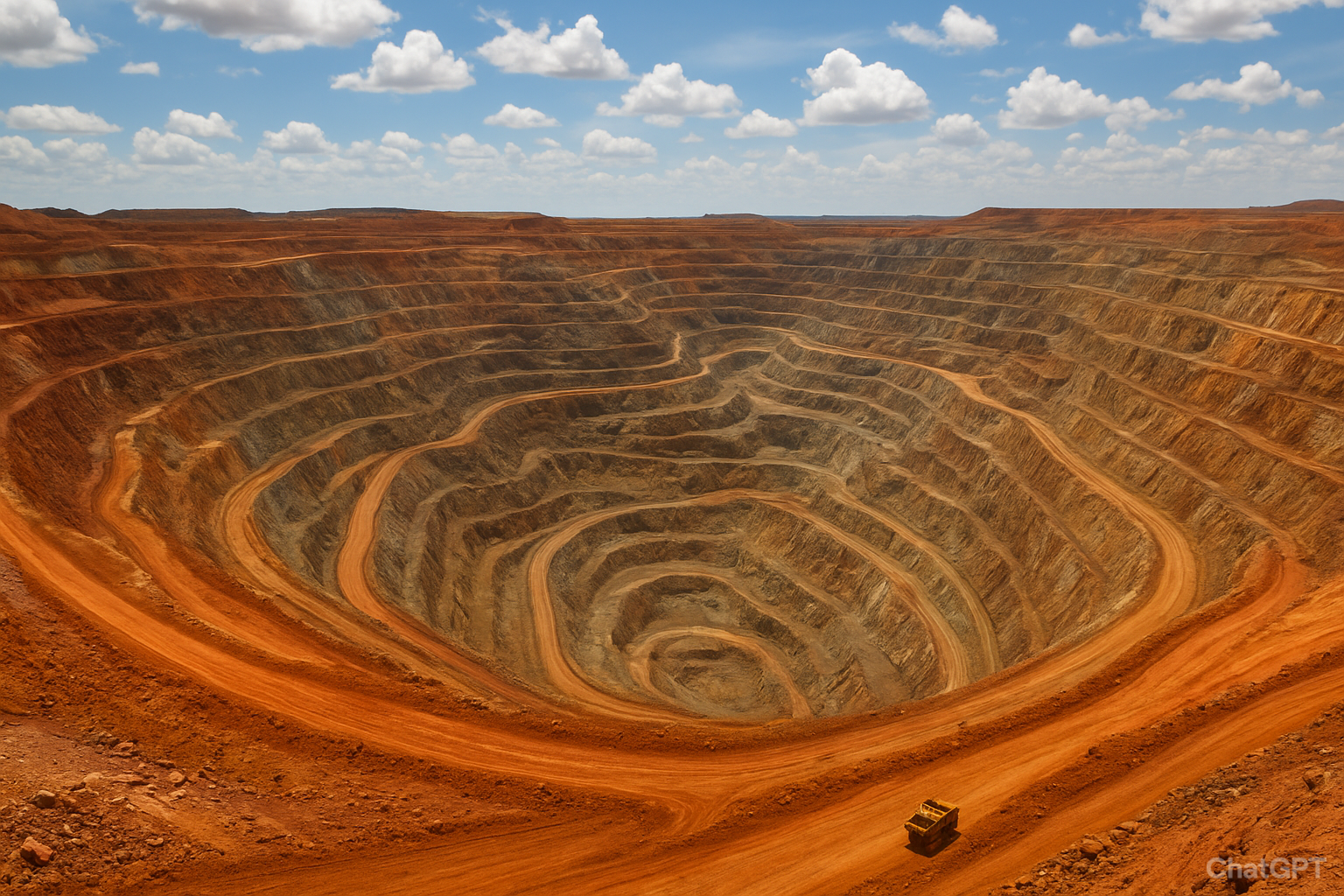
Your choice of extraction depends on depth, geometry, and ore characteristics. Open‑pit mining dominates for near‑surface porphyry and large low‑grade deposits; it uses benching, shovels, and haul trucks to remove ore and waste. Typical pit slopes, strip ratios, and fleet productivity are central to cost estimates.
Underground methods apply when ore is deep or steeply dipping. Common methods include block caving for large, lower‑grade orebodies and cut‑and‑fill or longhole stoping for higher‑grade, irregular deposits. You must consider ventilation, ground support, and dilution control. For oxide copper amenable to heap leach, you may place crushed ore on lined pads and irrigate with sulfuric acid to extract copper cheaply over months to years.
Ore Processing and Refinement
Processing diverges by mineral type. For sulfide ores you typically use crushing and grinding followed by froth flotation to produce a copper‑rich concentrate (20–30% Cu). You then send concentrate to a smelter, where pyrometallurgical steps — smelting, converting, and refining — produce blister copper (~98–99% Cu) which is refined further by fire refining or electrorefining.
For oxide ores you apply hydrometallurgy. Crushed ore is heap‑leached with sulfuric acid to dissolve copper as a sulfate solution. Solvent extraction (SX) concentrates copper from the leachate, and electrowinning (EW) plates high‑purity cathodes (typically 99.99% Cu). Key control points you monitor include particle size, flotation reagent program, leach residence time, solution chemistry (pH, Eh), and impurity levels that affect cathode quality.
Environmental and Economic Impact
Copper production affects land, water, air quality, greenhouse gas emissions, and local economies through jobs and exports. You should expect trade-offs between operational costs, regulatory compliance, and community impacts when evaluating mining projects or policies.
Sustainability Initiatives
You will find most large mines pursuing three measurable objectives: reduce greenhouse gas emissions, limit water use, and improve tailings management. Many operations shift from diesel to electric haul trucks and install on-site renewable power to cut fuel consumption and CO2; this lowers operating costs over time but requires upfront capital and grid upgrades.
Water recycling and dry-stacking tailings reduce freshwater withdrawals and the risk of dam failures. You should look for metrics such as percentage of process water recycled, volume of tailings stored dry, and frequency of water-quality monitoring to compare sites.
Life cycle assessment (LCA) tools are increasingly used to quantify impacts across production stages. Check whether an operation reports LCA-based indicators (primary energy demand, global warming potential, acidification) and third-party certifications or public environmental performance data.
Global Market Trends
Demand for copper is rising due to electrification, renewable energy, and electric vehicles, which increases mine development pressure and investment flows. You should watch projected demand growth rates, concentrator capacity additions, and the timeline for new mines, since supply shortfalls can raise prices and spur exploration.
Trade patterns matter: major producers and consumers (Chile, Peru, China) influence prices and investment risk. Look at export volumes, smelting capacity, and logistics constraints; bottlenecks in smelters or concentrate transport can create regional premiums.
Prices drive sustainability choices. Higher copper prices make capital-intensive decarbonization and remediation more feasible, while low prices compress margins and can delay environmental upgrades. Monitor capital expenditure plans and announced closures or expansions to assess future environmental pressure and local economic impacts.